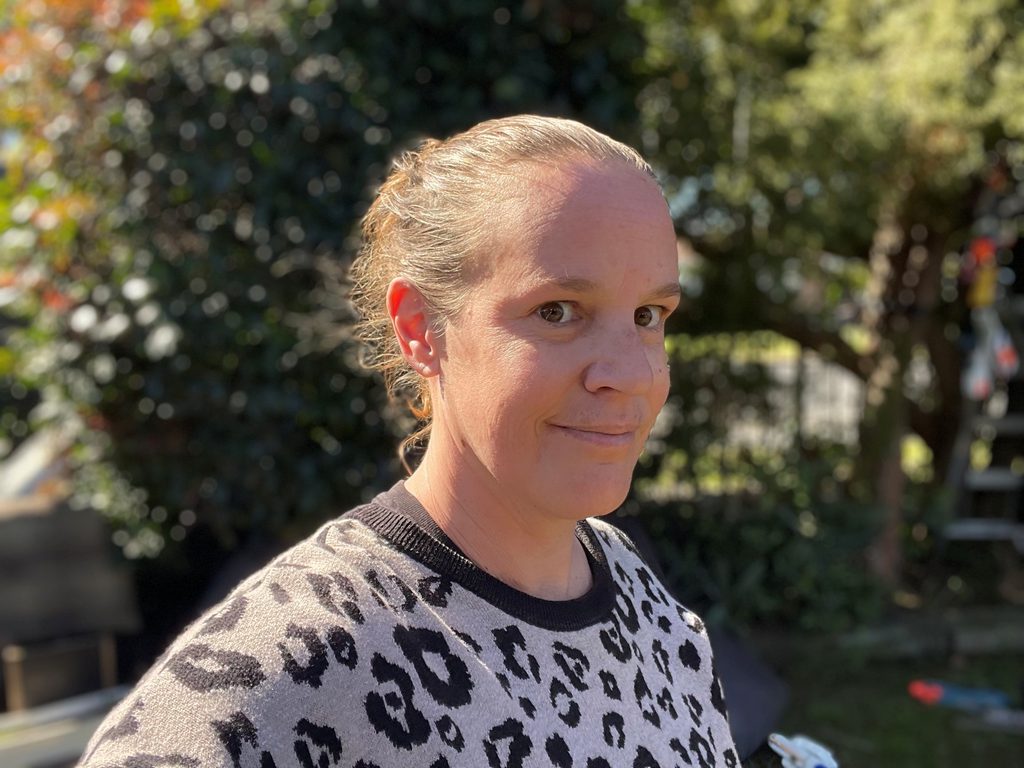
Mel’s journey with symptoms of endometriosis and adenomyosis began almost 13 years ago. However, it wasn’t until just a year and a half ago that she first heard of these conditions from her GP.
After 10 years of chronic pain, Mel was diagnosed with fibromyalgia in 2021. It wasn’t until late 2024, when her periods, which had always been ‘normal’ for her, suddenly changed and began affecting her ability to work, that she started looking for further answers.
Fortunately, Mel had a positive experience with a new GP. Within the first five minutes of her appointment, endometriosis was raised as a possible explanation for her symptoms.
“I had no idea that so many of my symptoms could suddenly be tied together and had a name.”
“The relief of getting an answer was so immense. All the years and years of doctors and tests and there was a light.”
Mel considers herself very fortunate to have two young boys, now aged 10 and 7. However, living with chronic pain has meant they have grown up knowing their mum as someone who is often unwell.
“They’ve only ever known me to be ‘sick’ their whole lives, so to know that I could possibly be a totally different mum and partner was so exciting,” Mel says.
The impact of her symptoms has also extended into her social life. Over the past 13 years, Mel has struggled to maintain friendships, with unpredictable symptom flare-ups often forcing her to cancel plans.
“I wish more people knew how all-consuming endometriosis can be. I never wanted to be that person. In saying that, the village I have around me now is the most important and supportive thing in my life,” Mel shares.
Navigating the healthcare system
Mel considers herself one of the fortunate ones to have been referred to a gynaecologist through the public health system. Within eight months of her initial diagnosis, she had a date scheduled for a total hysterectomy.
Her surgery took place in June 2025 and went perfectly to plan. However, getting to that point was far from straightforward. It involved numerous emails, cancelled appointments and even encouragement from her specialist to make a formal complaint to the District Health Board (DHB). Within two days of submitting her complaint, Mel had a date for outsourced surgery.
“My biggest frustration around endometriosis treatment in New Zealand is not only the years and years it can take to get a diagnosis, but also the fact that unless you are willing to stand up and fight for yourself, you are just left in limbo,” Mel says.
Giving back to improve understanding
Just two days before her hysterectomy, Mel volunteered at a Royal Australian and New Zealand College of Obstetricians and Gynaecologists (RANZCOG) Ultrasound Scanning for Endometriosis workshop. She spent two hours undergoing an internal ultrasound, allowing specialists to develop and practise their scanning skills.
“I knew as soon as I had my surgery, I couldn’t help, and if no one offers, then I don’t know how we can expect specialists to learn,” Mel says.
Mel has also become a strong advocate for people living with endometriosis in New Zealand, speaking to the media about the delays many experience in receiving a diagnosis.
By sharing her experience and volunteering her time, Mel hopes to contribute to greater understanding of endometriosis and help improve the experiences of others navigating their own journeys.