


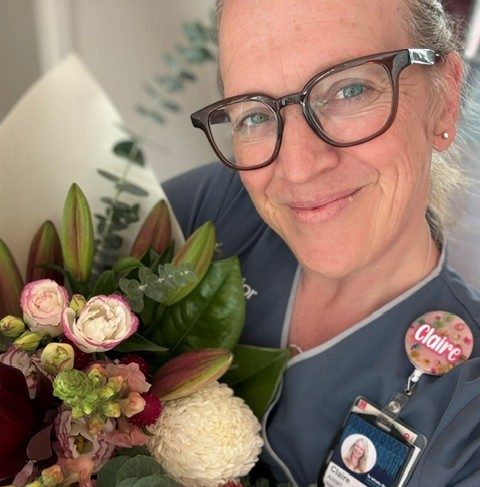
Claire experienced her first period when she was around 12 to 13. From the beginning, her periods were what she describes as “hot and heavy”, with pain that could be severe enough to send her home from school.
“I would have to ring Mum to come and get me from school,” she says. “I was regularly taking painkillers to manage the symptoms.”
As she moved into her 20s, things seemed to settle. Her periods became more regular and the pain levels evened out. At the same time, Claire was experiencing other hormonal symptoms, including increased hair growth on her face, which led to investigations for polycystic ovary syndrome* (PCOS). PCOS was later ruled out.
It was in her 30s that Claire noticed the pain beginning to increase again. She returned to her GP to try to understand what was happening. Claire describes herself as having a high pain tolerance, so the fact that she was noticing a significant change in her pain was something she wanted to investigate.
Endometriosis was raised as a possible explanation. Claire was also advised that if having children was important to her, she should consider trying to fall pregnant sooner rather than later.
She left the appointment feeling disappointed by the direction of the conversation and, for many years, did not pursue further investigations or treatment.
Looking back, Claire says this was part of a much longer journey towards understanding what was happening in her body.
Claire has always loved hiking and tramping, but during the COVID-19 pandemic, she swapped her usual outdoor activities for indoor workouts. She really enjoyed the change but gradually noticed that some of the movements caused a painful “stretching and pulling” sensation inside her body.
Around the same time, an unrelated injury led to Claire having an MRI. The scan showed that she had a bulky uterus, prompting a referral to a specialist through the public health system.
Claire had also tried to arrange private health insurance with Southern Cross. She was upfront about her symptoms and the possibility that she had endometriosis, but her application for cover was declined.
A second MRI was arranged through a public health specialist, and Claire was eventually diagnosed with Stage IV endometriosis and adenomyosis.
She remembers taking her mother with her to the appointment for support.
“I was overwhelmed and shocked,” she says.
The diagnosis brought some answers, but it also raised difficult questions about what came next. Claire was advised that a full hysterectomy was the recommended treatment, with a bowel surgeon on standby in case the endometriosis had affected other organs.
For Claire, this was an enormous decision. She had always wanted to become a mother and had imagined having children with the support of a partner. She needed time to process what the surgery could mean for the future she had pictured for herself.
While she considered her options, Claire was also starting a new chapter in her career as a nurse educator. She focused on looking after herself in the ways that felt right for her, including eating well, trying alternative therapies such as endometriosis massage and, importantly, learning more about endometriosis.
As Claire learned more about endometriosis, she began to see her own experiences in a different light.
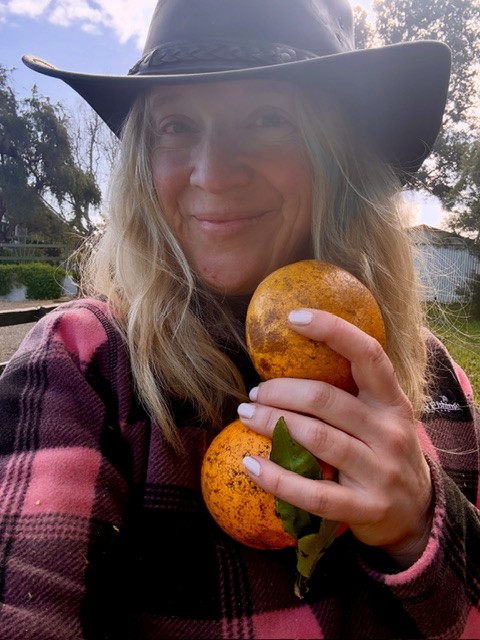
“Learning about endometriosis helped me put the pieces together,” she says. “I could recognise when I was having a flare-up and understand that certain symptoms were due to endometriosis.”
That knowledge gave Claire a greater understanding of her body and helped her feel more informed about the decisions she was making.
It was also during this difficult period that Claire met her now husband. She was honest with him early in their relationship about her diagnosis, the possibility of surgery and the impact it could have on her ability to conceive.
He supported her decision to have surgery and was open to alternative possibilities for having children in the future.
“Through hard things came beautiful moments,” Claire says.
As Claire continued learning about her condition, she also began wondering how she had developed endometriosis when there was no known family history. An unexpected discovery eventually provided an answer.
Her mother had previously undergone surgery, and discharge papers that had not been provided to her at the time revealed that her mother had also developed endometriosis later in life.
Eventually, Claire felt ready to go ahead with the surgery. It was not an easy road to getting there, with the procedure being cancelled three times within the public health system before it finally went ahead.
The surgery itself was complex, but ultimately straightforward. Claire was told afterwards that her uterus had been around three times the usual size. Her surgeons were able to preserve one ovary, preventing early menopause, and thankfully, additional bowel surgery was not required.
The difference to Claire’s health was profound.
“Overall, my health improved by about 98% after surgery,” she says.
But while the physical recovery was a huge relief, Claire was also coming to terms with the emotional impact of losing her fertility.
During her recovery, she participated in grief counselling to help her work through the thoughts and feelings that came with that loss.
“Why did I have a uterus if I couldn’t use it?” she remembers asking herself.
For Claire, having space to acknowledge that grief was an important part of healing. She also credits the support of her specialist, her mother and her husband with helping her through what was an incredibly difficult period.
Today, Claire looks back on her experience with a greater understanding of just how complex endometriosis can be. One of the things that surprised her most was the extent to which the condition can affect the body.
“It’s not just a local pelvic issue,” she says.
She wishes more healthcare professionals understood how debilitating endometriosis can be and the impact it can have across a person’s whole body and life.
Her own experience has also shaped the way she approaches her work as a nurse educator. Although Claire currently works with babies, she says her experience has made her particularly conscious of what mothers may be going through.
It has reinforced for her the importance of listening carefully when someone describes their symptoms and recognising when they may need further support.
For people who are experiencing symptoms or feel they are being dismissed, Claire believes that learning about endometriosis can be a powerful step.
“Healthcare takes a long time. You have to be your own best advocate and take ownership of your health to see improvement.”
She encourages people to keep seeking answers if they are not getting the support they need, including considering whether another doctor may be able to help.
For Claire, understanding endometriosis did not change what she had been experiencing, but it helped her make sense of it. After years of living with unexplained pain, having answers gave her the knowledge to understand her body, advocate for herself and make informed decisions about her health and future.
And while her journey has included pain, uncertainty and grief, it has also brought unexpected moments of support, love and hope.
“Through hard things came beautiful moments.”
*Polycystic ovarian syndrome (PCOS) is now known as Polyendocrine Metabolic Ovarian Syndrome (PMOS).
Share Your Story
Stories from people living with endometriosis help build understanding, reduce isolation and remind others in our community that they’re not alone. Our Share Your Story series gives people affected by endometriosis the opportunity to share their experiences and help raise awareness of the realities of living with the condition.
If you’d like to share your story and see it featured across Endometriosis New Zealand’s communication channels, we’d love to hear from you. Email jen@nzendo.org.nz to find out more.