


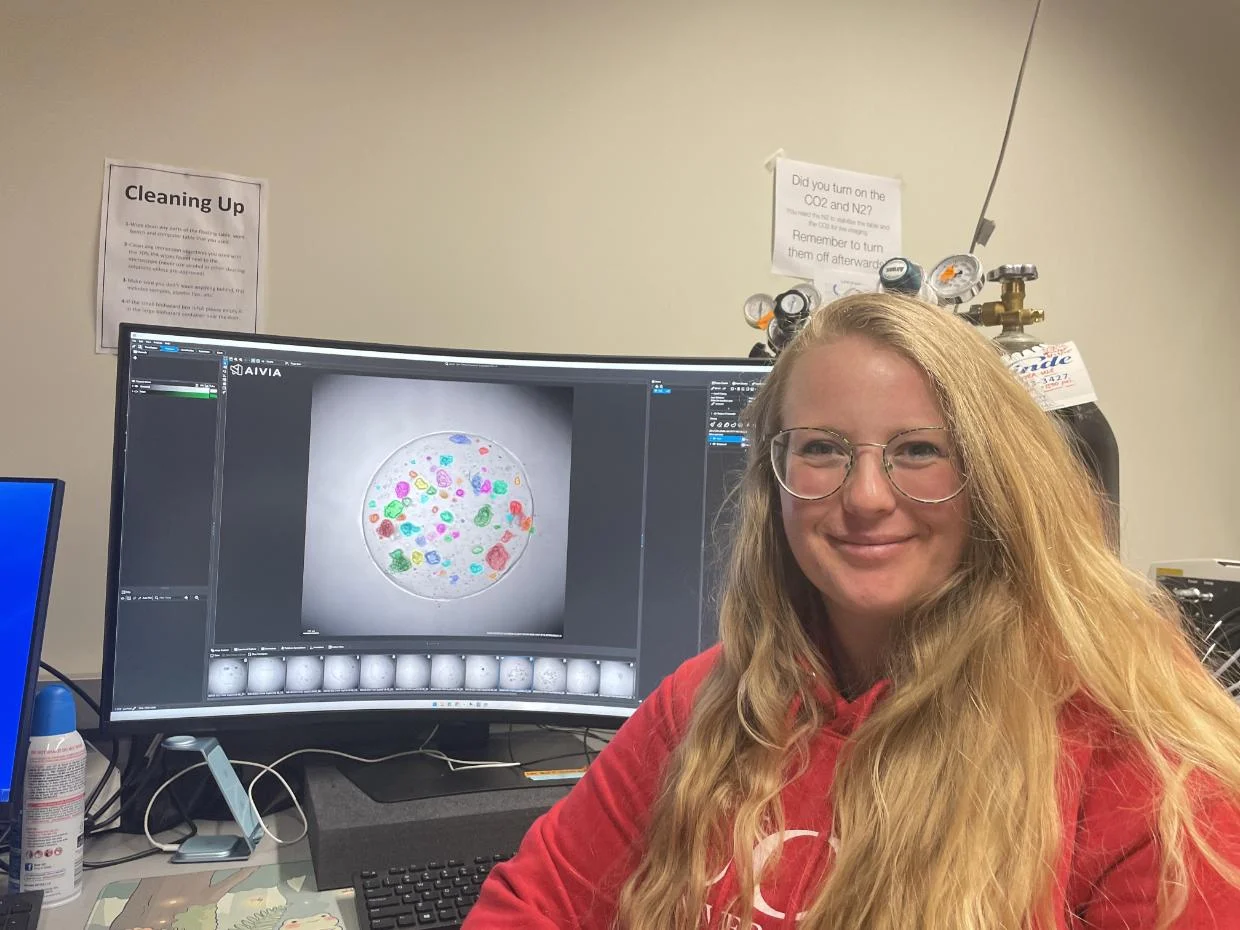
Endometriosis has been described for thousands of years, so why are patients with the condition still waiting an average of 10 years for a diagnosis? Te Whare Wānanga o Waitaha | University of Canterbury (UC) PhD student Katherine Ellis hopes her research will improve understanding of the mechanisms underpinning the disease and one day help predict which new treatments will be effective.
I first became aware of endometriosis as a teenager when I saw how it affected girls at my school. Those early experiences highlighted how important it is to find new ways to improve the lives of endometriosis patients.
Endometriosis is a chronic, debilitating, incurable condition where tissue similar to the uterine lining is found outside the uterus. Through a range of complex mechanisms, many of which we do not understand, patients can experience significant pain and other symptoms that can interfere with every domain of their lives.
I started my PhD in Chemical and Process Engineering at UC in 2023. The focus of my work is in two areas; defining the system of endometriosis care in Aotearoa New Zealand, and developing more accurate cell-based models of endometriosis.
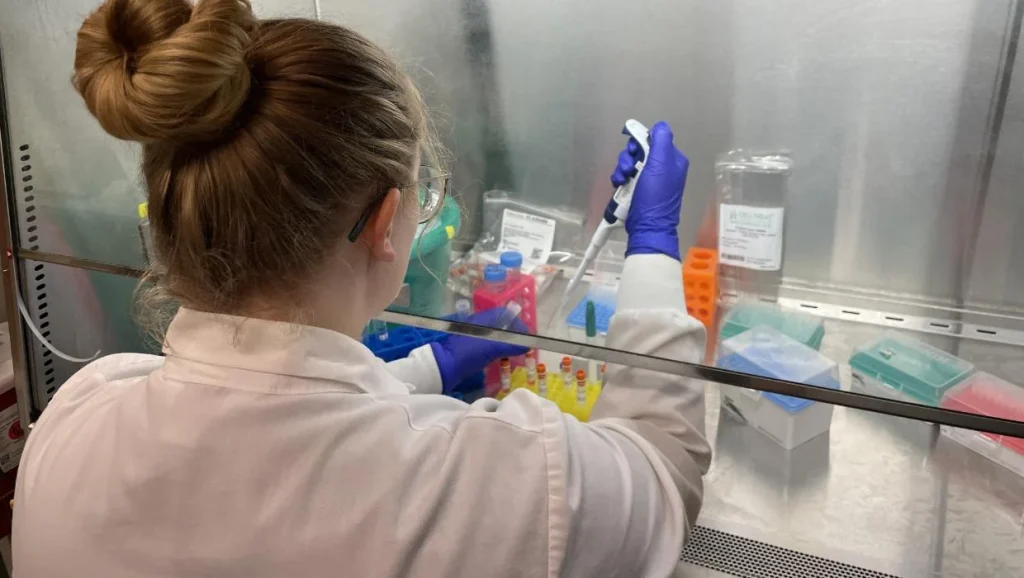
I think this mixture of people-focused and lab-based research is important, because solutions developed without patient and practitioner input risk not being fit for purpose. The well-being of patients is always at the heart of what I do.
There are a number of challenges in endometriosis care in Aotearoa New Zealand. While the condition has been described for thousands of years, becoming aware endometriosis exists is often the first hurdle for patients. I found nearly half of the Aotearoa New Zealand patients I surveyed had never heard of endometriosis when they first started having symptoms.
Next, talking to a doctor about these symptoms can often feel awkward, particularly as the symptoms can be inherently intimate.
From interviews and surveys with thousands of patients, I found the vast majority have experienced their symptoms being dismissed by a medical practitioner. These experiences can make it incredibly difficult for them to return to medical care and risk facing further rejection.
On top of all of these issues, endometriosis is a fundamentally difficult pathology to identify. Surgical removal and staining tissue samples has long been the gold standard, while endometriosis is frequently missed or invisible during imaging (although research is rapidly improving endometriosis detectability). These challenges contribute to a decade of delay, on average, between symptoms onset and diagnosis confirmation.
Medical practitioners are faced with significant barriers to providing the care they want to. I have been lucky enough to interview and survey hundreds of passionate and caring GPs and nurses who are dedicated to supporting endometriosis patients.
These practitioners have described to me that their referrals for specialist support are often denied, and they do not have the tools to provide holistic care options, or the time available in consultations to build the necessary therapeutic bonds.
In my lab-based work, I found the invasiveness of endometriosis-derived cell lines is on par with some cancer-derived cell lines. These findings led me to write about how, while not cancerous itself, endometriosis cells and tissues exhibit hallmarks of cancer, including resisting cell death and evading surveillance by the immune system. This highlighted the capacity to leverage pathways and advancements in cancer research to accelerate findings for endometriosis.
During my PhD, I’ve had the privilege to work with Dr Jacqueline Donoghue at the Melbourne Royal Women’s Hospital, and with Professor Linda Griffith at the Massachusetts Institute of Technology while on my Fulbright Science and Innovation Graduate Award.
In these labs, I have isolated endometriotic cells to assess the influence of the mechanical microenvironment on cellular characteristics and behaviours. By developing cellular models which more accurately reflect the environment these cells experience within the body, we can improve our understanding of the mechanisms underpinning this disease’s behaviours, and more accurately predict which novel treatments may work for patients.
My research projects are just some of many exciting advancements being made in the endometriosis space, but there is still a long history of undervaluing and underfunding the disease to be overcome.
My work has highlighted that Aotearoa New Zealand endometriosis care requires systematic, well-planned, holistic improvements accompanied by sufficient resources, education, investment, research, and an enduring commitment to seeing these patients thrive.
Supervisors: Dr Rachael Wood (University of Canterbury), Dr Jacqueline Donoghue (University of Melbourne, Royal Women’s Hospital), and Professor Linda Griffith (Massachusetts Institute of Technology).